
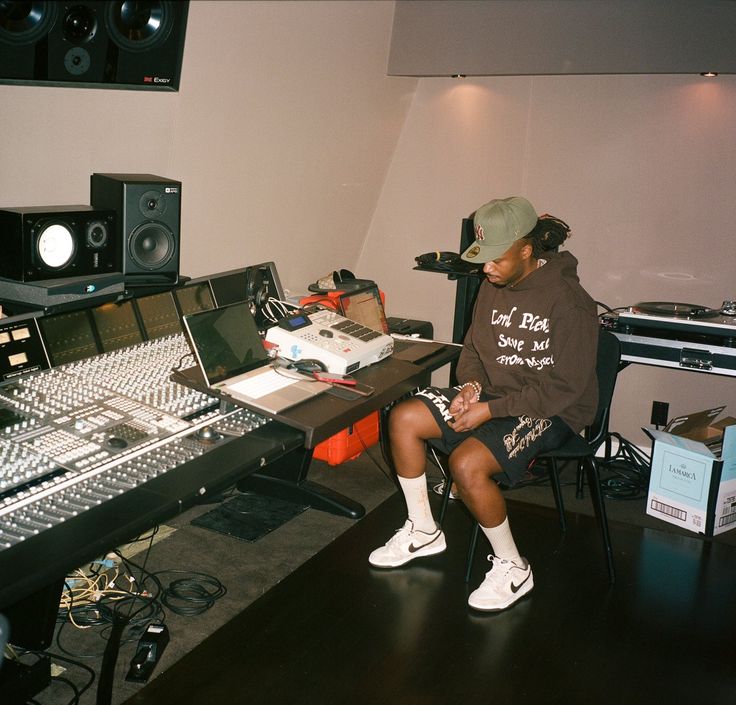
Metro Boomin didn’t just wake up one day as one of the most sought-after producers in the game—he built it from scratch, beat by beat. Born Leland Tyler Wayne in St. Louis, Metro had that natural hunger for music from an early age. At just 13, he started playing around with FruityLoops, laying down beats in his bedroom, trying to carve out his sound. Originally, Metro wanted to be a rapper, but quickly realized his magic was behind the boards, not in front of the mic.
The Hustle of Metro Boomin Begins
Growing up in St. Louis wasn’t easy, but Metro had a vision. His mom saw the potential in him early and supported his passion fully. By high school, she was driving him back and forth to Atlanta so he could work with up-and-coming artists. Atlanta was popping off at the time, becoming a hub for trap music, and Metro wanted in. He wasn’t just trying to make it—he was trying to be the best(Wikipedia).
Metro linked up with OJ da Juiceman, an Atlanta mixtape legend, and from there, the doors started opening. OJ recognized the young producer’s talent, and soon, Metro was making connections with Atlanta’s elite. But what really put Metro on the map was his collaboration with Future. By the time he was in 11th grade, he had one foot in St. Louis and the other in ATL. The grind was real, but he was determined to make it, and after high school, he made the big move to ATL permanently(DELUX Magazine).
Metro Moving from ATL to the Big Leagues
Once he set up shop in Atlanta, the grind kicked into overdrive. He started working with Future, and the two created hit after hit. “Karate Chop” was one of the first bangers that Metro produced for Future, and it was the launchpad that Metro needed. The track blew up, and from that point on, Metro was in the mix with all the heavyweights. He dropped out of Morehouse College after one semester because the studio was calling, and he couldn’t juggle both.
Metro’s signature sound—dark, moody, and filled with haunting melodies—became the backbone of trap music. But it wasn’t just his sound that got people talking—it was his work ethic and his ability to adapt. Metro didn’t stick to one lane; he evolved with the times, working with artists like Drake, Travis Scott, and The Weeknd. His beats were versatile enough to cross over into mainstream without losing that raw trap energy(A3C Festival News and Updates).
Building His Own Brand
While Metro was killing it behind the boards, he was also making moves to build his brand. In 2013, he dropped his first producer mixtape, 19 & Boomin’. It featured artists like Gucci Mane, Young Thug, and Trinidad James, and put him in a whole different light. It wasn’t just about being a producer anymore—Metro was an artist in his own right. His name was now associated with chart-topping records and defining the sound of a generation.
His collaboration with Future kept growing stronger. By 2014, Metro was the executive producer on Future’s Monster mixtape, and the hits just kept coming. Tracks like “Mask Off” and “Low Life” solidified Metro as the go-to guy for creating timeless hits. His influence wasn’t just limited to Atlanta anymore—Hollywood was calling, and Metro was ready to take over.
Taking Over Hollywood
Metro’s work with Future, 21 Savage, and Travis Scott made him a household name in the hip-hop world, but soon, his beats started showing up in unexpected places. Collaborating with the likes of Kanye West on The Life of Pablo and producing for Drake, Metro’s sound was now part of the soundtrack for Hollywood. His beats were inescapable, whether you were in the club or watching the latest blockbuster movie trailer. Hollywood stars wanted that Metro sound, and he was more than happy to deliver.
Metro even stepped outside of music to create Metroverse, a comic book universe that fused his dark, futuristic beats with a superhero storyline. It was another testament to Metro’s creativity, showing that he could dominate more than just the music scene. He was building a legacy, and this was only the beginning.
What Aspiring Producers Can Learn from Metro
If you’re an aspiring producer, there’s a lot to learn from Metro Boomin’s rise. He didn’t wait for opportunities to come to him—he created them. Whether it was networking in Atlanta or locking in studio time with up-and-coming artists, Metro understood the importance of putting in the work and making connections.
The tools he used to get there were just as important. Metro’s sound is unique because he took time to experiment and craft something that stood out from the rest. For producers trying to follow in his footsteps, having the right tools is crucial. This is where a solid sample pack like Trapify comes in handy. With Trapify, you get access to hundreds of melody loops, drum shots, and FX sounds that can elevate your beats to the next level. It’s all about having the right sounds in your arsenal, so when that big opportunity comes knocking, you’re ready.
Metro Boomin’s story is a reminder that success doesn’t happen overnight. It’s about staying consistent, evolving with the times, and never being afraid to take risks. From his bedroom in St. Louis to the studios of Hollywood, Metro’s journey shows that with the right grind and the right tools, you can make your dreams a reality.